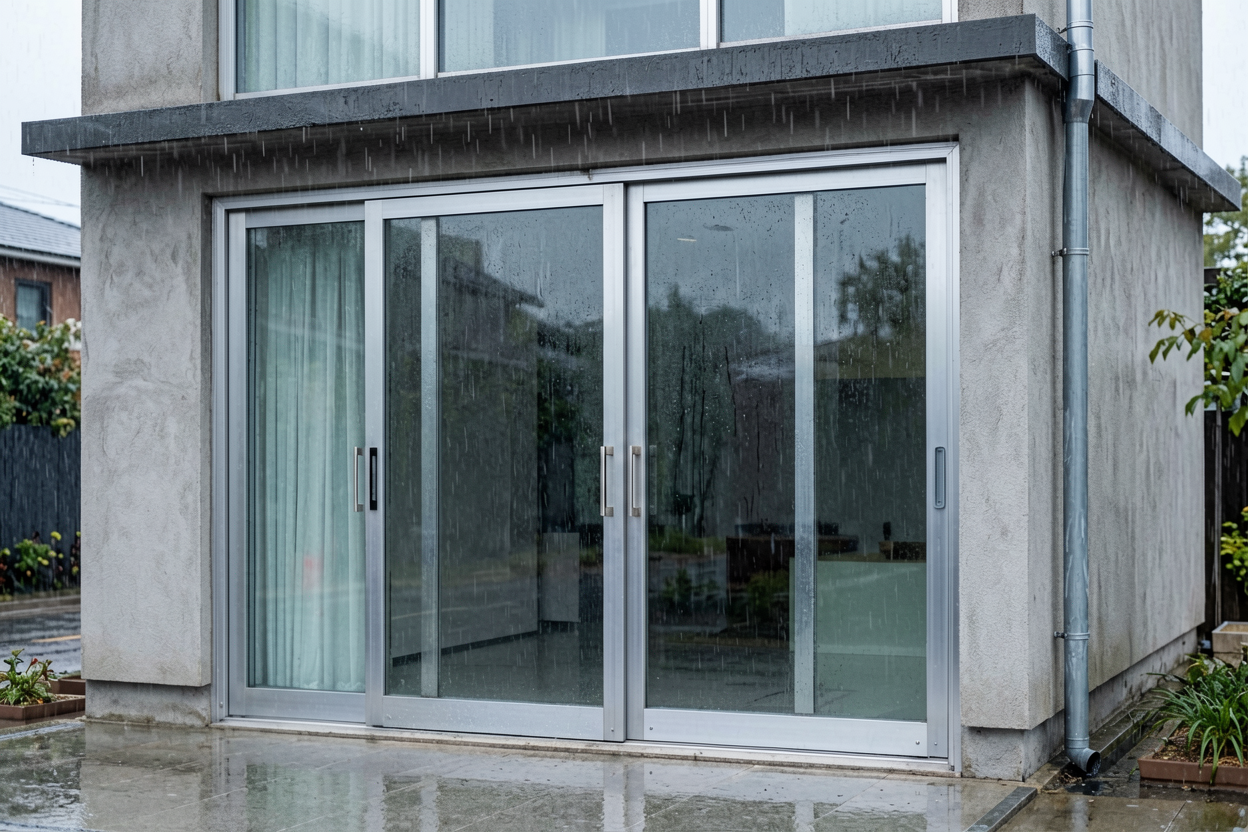
Leakage risk usually comes from interface failure, incomplete drainage planning and rushed installation decisions rather than one defective component alone.
Large openings create beautiful spaces, but they also increase exposure to weather and installation complexity. Successful risk control depends on system thinking from design through site execution.
Review Leakage Risk by Interface
Water problems often happen where systems meet: sill to slab, frame to waterproofing, threshold to exterior finish or glazing line to corner detail. These locations should be reviewed as dedicated risk points.
A product can perform well in isolation and still fail if the surrounding construction does not support its drainage logic.
- List every interface where water must be collected, redirected or discharged.
- Check whether the building detail interrupts or traps drainage paths.
- Review corners, recessed openings and flush thresholds with extra care.
Do Not Separate Product Selection from Installation Planning
Leakage control should continue from system choice into installation method, fixing strategy and site sequence. Teams create risk when they assume the installer can solve unresolved design questions in the field.
Large-format assemblies especially need approved details before arrival on site.
- Confirm tolerances, shim zones and fixing methods during shop drawing review.
- Coordinate sealant responsibility and waterproofing trade interfaces early.
- Keep installation inspection points in the site checklist, not only in supplier notes.
Respect Drainage, Maintenance and Cleaning Reality
Tracks, drainage outlets and external weep paths must remain functional after handover. Beautiful hidden details still need a realistic maintenance path.
This matters even more on villas and commercial projects with landscaping, sand, dust or heavy rainfall patterns.
- Check that cleaning access exists for tracks and visible drainage areas.
- Prevent landscaping and finish edges from blocking water discharge.
- Provide the owner with simple maintenance guidance for exposed openings.
Use Mock-Ups When the Risk Justifies It
For unusual details, oversized openings or highly exposed facades, mock-ups can reveal issues before mass production or final installation. They are especially useful when multiple trades share responsibility at one opening condition.
The mock-up should be treated as a learning tool, not just a marketing sample.
- Prioritize mock-ups for corner doors, low thresholds and mixed facade transitions.
- Document corrections clearly before the bulk package is released.
- Use the mock-up review to align supplier, installer and general contractor expectations.
Recommended Next Step
Before production release, review all threshold, sill, corner and frame-to-wall details in one coordination session with the architect, contractor and supplier.
Frequently Asked Questions
Is leakage risk mainly a product problem?
Usually no. Many issues appear at the interface between product, waterproofing, finish and installation.
Are flush thresholds more risky?
They can be if drainage and finish coordination are not carefully resolved.
When should mock-ups be considered?
When the openings are unusually large, exposed or architecturally complex.