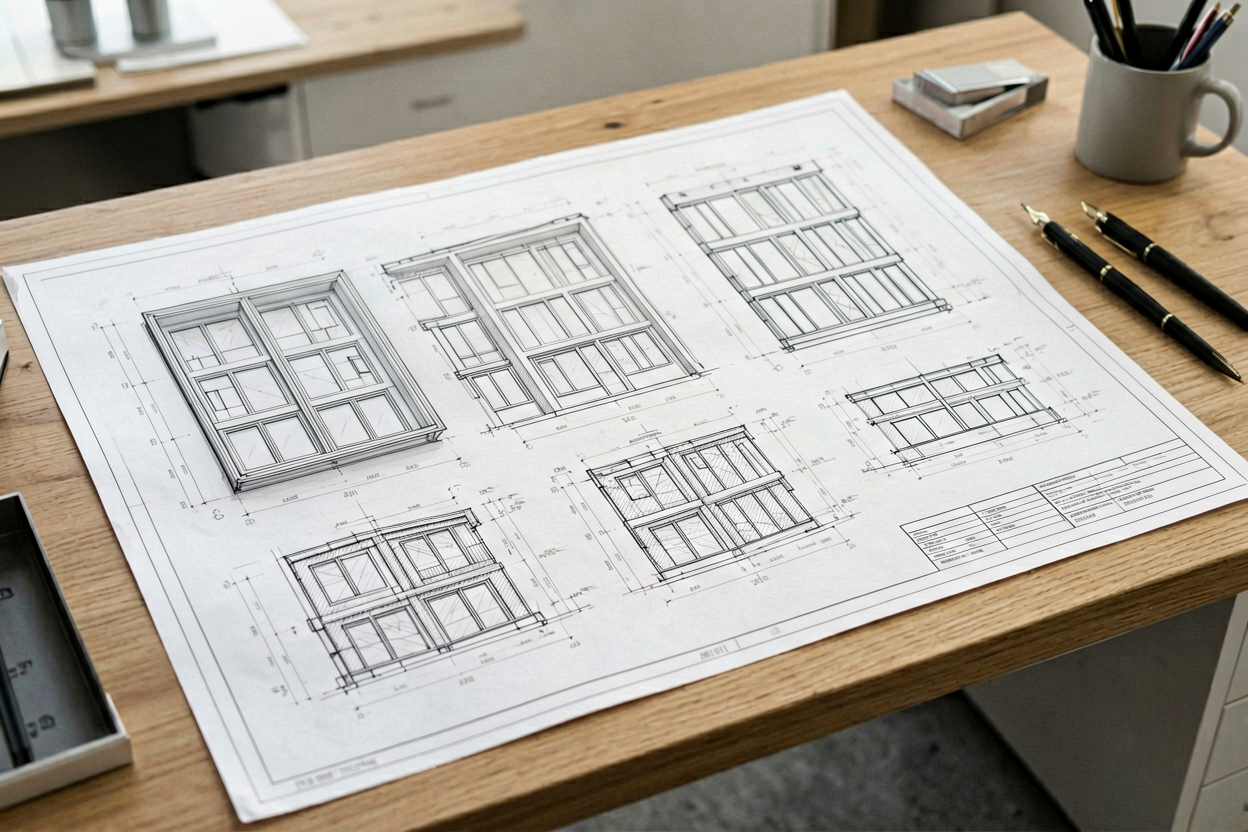
Shop drawings should explain how the facade will actually be made and installed, not simply repeat design intent at a smaller scale.
Facade and glazing packages become buildable when drawings clarify dimensions, interfaces, sequencing and accessory logic in a way the full project team can rely on. If that clarity is missing, site improvisation usually follows.
Drawings Must Translate Design into Buildable Information
Good shop drawings bridge the gap between concept documentation and manufacturing reality. They show exactly how the approved design is resolved at the opening, facade module and interface level.
That translation is where many procurement and site problems can be prevented.
- Include elevation logic, section clarity and identifiable opening references.
- Show panel relationships, frame depths and visible sightline decisions clearly.
- Separate standard conditions from unique corner or feature details.
Critical Interfaces Need Their Own Attention
The most valuable sheets are often the ones that explain interfaces: slab edge, waterproofing, threshold, corner, sunshade, stone surround or metal trim connections. These are the places where field assumptions become expensive.
If the interface is important to performance, it should be easy to find and easy to review in the drawing set.
- Highlight sill, jamb, head and corner transitions for each major condition.
- Coordinate facade interface details with structural and waterproofing teams.
- Use consistent references so installers and supervisors can trace the same detail easily.
Approval Is Not Only About Appearance
Architects may focus on visual alignment, while contractors and suppliers are often focused on dimension, sequence and buildability. Effective review brings those priorities together instead of treating them as separate approval tracks.
This balanced review is essential before production release because late comments can disrupt manufacturing and site planning.
- Check appearance, dimensions, hardware and installation strategy in one review cycle.
- Resolve finish, glazing and accessory notes before production authorization.
- Document approval comments in a way that can be traced later during site work.
Use the Drawings to Support Site Execution
Shop drawings should remain useful after approval. Installers, supervisors and procurement teams should be able to use the same documents to confirm package identity, sequencing and interface responsibility.
When drawings are structured well, they become a practical field tool instead of an approval archive.
- Match package coding in drawings with labels used for production and shipping.
- Keep revision control clear so the site team works from the final issue.
- Store approved drawings with related schedules and issue logs in one shared location.
Recommended Next Step
Before approving shop drawings, confirm that every critical opening type, transition and interface has a reviewer and a response path for unresolved comments.
Frequently Asked Questions
Are shop drawings only for the supplier and architect?
No. They are also important for contractors, installers, procurement teams and site supervisors.
What details deserve the closest review?
Interfaces, transitions, corners, thresholds and any condition that affects performance or site sequence.
Can production begin while some comments are still open?
That creates risk. Critical comments should be resolved before final release.