Noise control is not determined by one glass label. Real acoustic performance depends on the complete opening system, including glazing build-up, frame quality, sealing and installation accuracy.
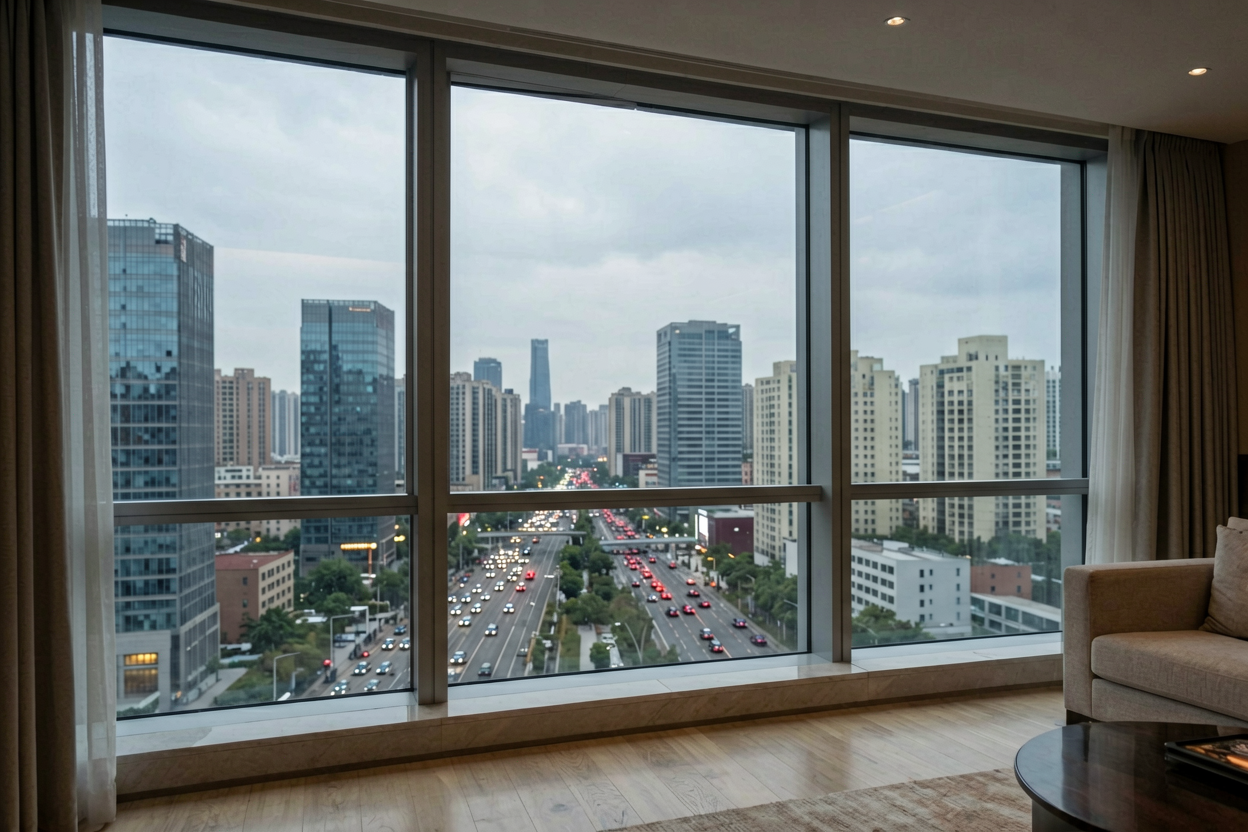
Urban towers near transit routes, arterial roads and active mixed-use districts often need a more careful acoustic strategy than suburban residential buildings. The facade should be specified according to actual exposure rather than marketing language.
Separate Acoustic Goals by Room Type
Bedrooms, living areas, public amenities and corridors do not always need the same acoustic priority. Better specifications identify where occupant comfort matters most and where the facade needs stronger noise control.
This prevents overbuilding every opening while protecting the spaces with the highest comfort expectations.
- Rank bedrooms and study spaces as the most sensitive zones.
- Compare road-facing, courtyard-facing and podium-facing facades separately.
- Coordinate facade intent with mechanical ventilation and fresh air strategy.
Review Glass Build-Up Together with Frame Design
Glass selection is important, but it should not be discussed in isolation. Frame rigidity, sash design, seals and locking pressure all influence how sound is managed at the opening.
On many projects, weak perimeter detailing or loose installation can reduce the benefit of a higher-grade glazing package.
- Confirm that the selected frame series supports the intended glazing build-up.
- Check operable window zones carefully because opening parts often become the weakest acoustic point.
- Ask for tested or referenced system combinations instead of component-only claims.
Reduce Noise Leakage at the Interfaces
Urban noise often bypasses the center of the glass and leaks through perimeter gaps, drainage paths and poor installation interfaces. This is why shop drawing clarity and site supervision matter.
Acoustic intent should therefore continue from product selection into the installation checklist and handover review.
- Coordinate frame-to-wall sealing details before production drawings are approved.
- Review acoustic weak points around trickle vents, access panels and operable sections.
- Use mock-up reviews where facade exposure is severe or highly visible.
Balance Comfort with Light and Appearance
Noise control should not undermine the facade concept. Glass color, daylight level and exterior reflectivity still affect sales appeal and architectural quality in residential towers.
The most successful package is usually the one that protects comfort while preserving the intended visual rhythm of the building.
- Review daylight expectations for bedrooms and living rooms alongside acoustic goals.
- Coordinate visible glass tone across mixed window and facade zones.
- Align comfort upgrades with the project’s unit positioning and market segment.
Recommended Next Step
When asking for acoustic recommendations, send room use, facade orientation and the noisiest external conditions so the supplier can review the opening package more accurately.
Frequently Asked Questions
Is thicker glass always quieter?
Not by itself. Frame design, sealing and installation also affect the final result.
Do operable windows reduce acoustic performance?
They can become the weakest point if the system and sealing details are not well specified.
Should all facades use the same acoustic glazing package?
Usually not. Exposure and room use often justify different priorities by elevation.